
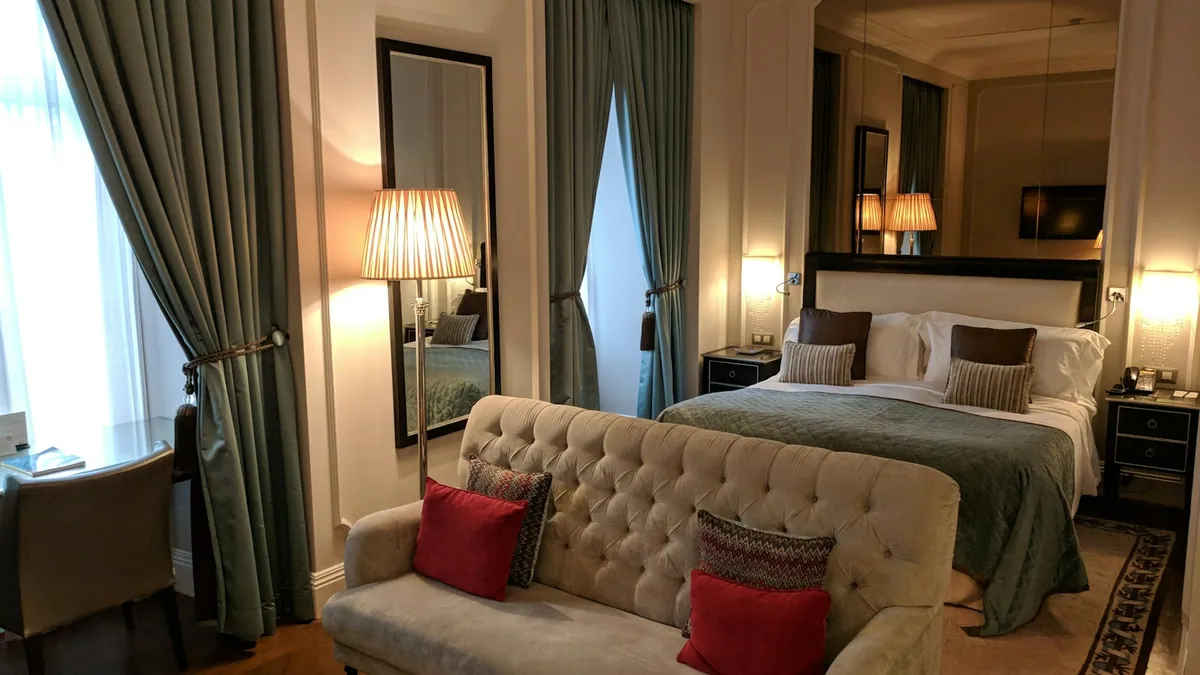
Equipment may continue to use energy while a room is empty, but a high reading does not automatically identify the cause or the right fix. Controls, building systems, maintenance condition and the way rooms are prepared all affect use. A hotel can investigate inefficient operation without compromising comfort, hygiene or the readiness promised to the next guest. For the wider operating context, see hotel owners | hotel operations | the Feathers Hospitality approach.
Good planning connects the guest experience with the team’s operating needs. The Feathers Hospitality approach parte do contexto de cada propriedade.
At a glance
- Compare like rooms and similar operating conditions.
- Check controls, schedules and maintenance before changing settings.
- Measure energy alongside comfort and room readiness.

Establish a comparable baseline
Choose rooms with similar orientation, equipment and operating patterns. Record occupancy, temperature, weather, maintenance status and control settings for the period. Compare energy use by time or room only when the meters and boundaries are understood; a whole-floor meter cannot reliably identify one room’s equipment.
Use a defined sample and note missing data. A room prepared for an imminent arrival is not equivalent to an empty room kept out of service. The aim is to find a pattern worth investigating, not to label a specific appliance inefficient from a single bill.
Check the control sequence and actual settings
Review thermostats, timers, occupancy sensors, ventilation schedules and any connection to the central building system. Confirm what each control is supposed to do and test the response. A room that appears empty to staff may still be in a guest-ready state or have a system designed to protect building conditions.
Do not change settings broadly before understanding the control sequence. Ask facilities or a qualified technician to check programming and the manufacturer’s instructions. A small adjustment can affect humidity, air quality, equipment life or comfort in adjacent spaces.
Inspect equipment and maintenance history
Look for unusual running time, noise, cycling, leaks or service warnings. Compare the room’s maintenance records with similar rooms and note recent repairs. An energy pattern may reflect a failing valve, sensor or fan rather than a need to replace the whole system.
The European Commission’s building-energy material describes efficiency renovation and control improvements as possible measures. It does not identify the cause of a hotel room’s consumption. Diagnose the asset first, document the finding and get a technical assessment where needed.
Separate idle periods from guest-ready periods
Map how rooms move from occupied to cleaned, inspected and available. Some equipment may need to remain active during the preparation window; other schedules could be aligned with the next expected use. Ask housekeeping and front desk when a room is considered ready and what controls staff are permitted to adjust.
Do not ask colleagues to switch off systems if that could affect hygiene, safety or the room’s delivery time. A procedure should identify who may change a setting, how it is restored and how a guest request overrides an energy-saving mode.
Measure performance and guest impact together
Track energy use with temperature complaints, maintenance calls, room readiness, rework and time out of service. If energy falls but comfort or readiness worsens, the change may have shifted cost rather than improved performance. Compare with an unchanged group where practical to distinguish a real effect from weather or occupancy changes.
Agree an acceptable comfort range and a way to respond to exceptions before testing a schedule. Share results with operations and facilities. The European Commission notes that renovation measures can improve building performance, but any project needs property-specific technical and financial appraisal.
Build a decision record before investing
Record the baseline, technical diagnosis, options, expected costs, operating disruption and evidence needed after a change. Compare adjustment, repair and replacement. If a vendor proposes new equipment, ask which measured problem it solves and how the hotel will confirm results after commissioning.
Assign an owner to review performance after the change and note assumptions that could affect payback. Keep maintenance and energy data together so future teams can see whether a control change worked. Avoid presenting estimated savings as guaranteed until verified under comparable conditions.
Frequently asked questions
Should equipment be switched off whenever a room is empty?
Not automatically. First confirm how the building system, hygiene, equipment and guest-readiness requirements work, then use an approved control procedure.
How can we tell if a room is using too much energy?
Compare comparable rooms and conditions, check meters and controls, and review technical and comfort evidence before identifying a cause.